Valorant
Level Design Practice
Date: 2026
Level Design Practice
A small-to-medium dual-point, three-lane tactical map designed for Valorant, inspired by the hutongs of Beijing.
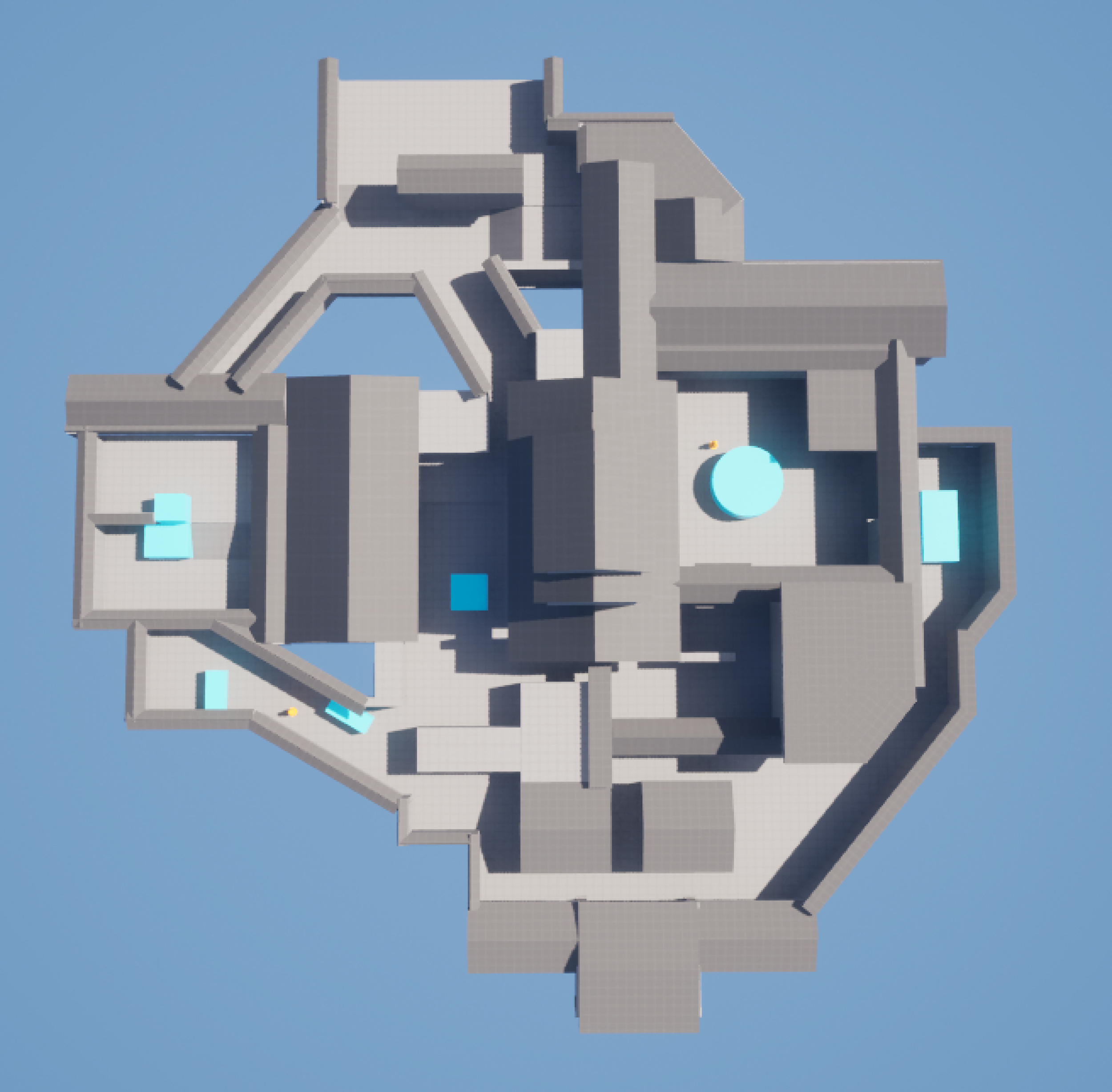
Defender
Attacker
B Site
A Site
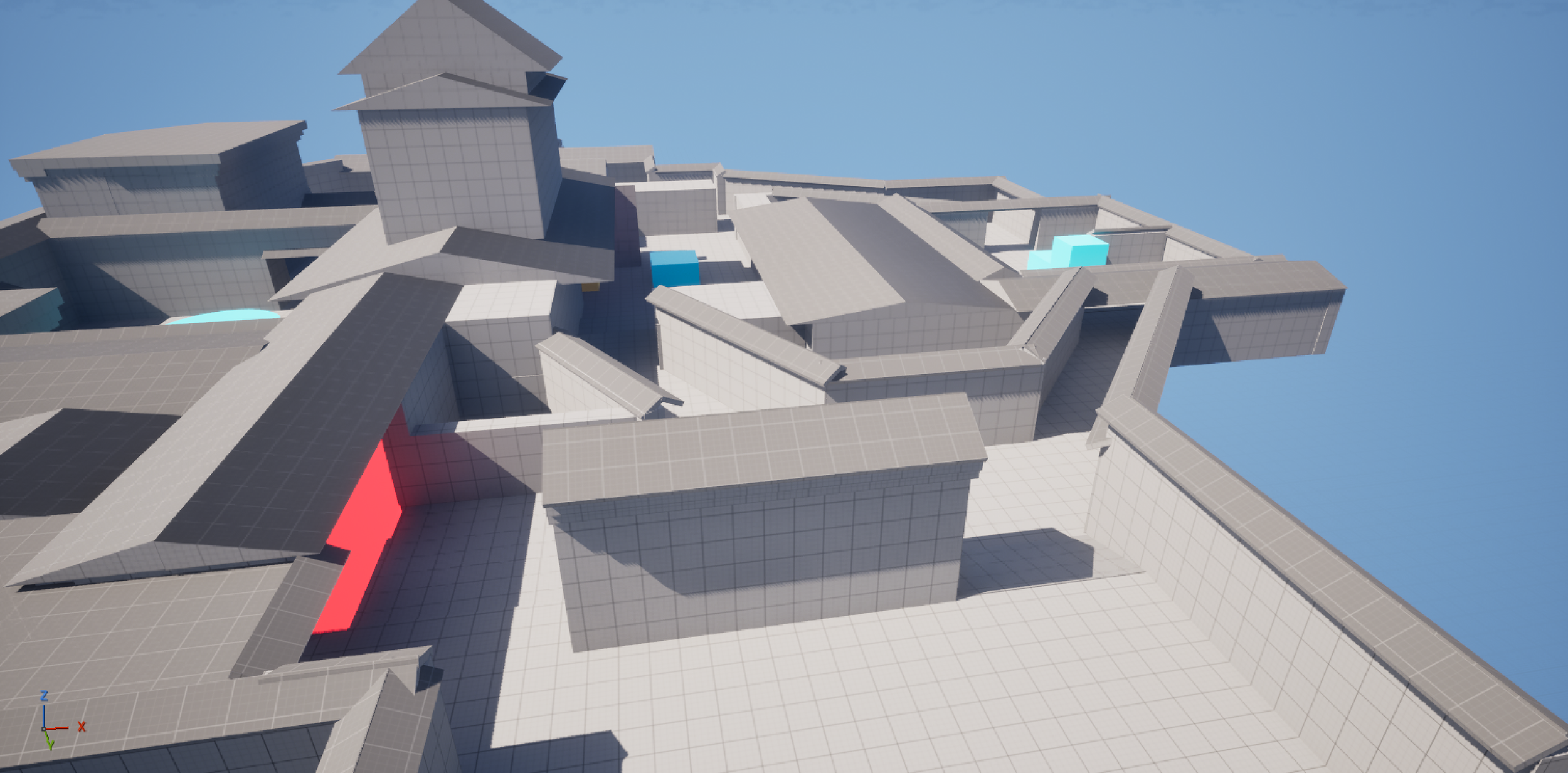
Map Overview
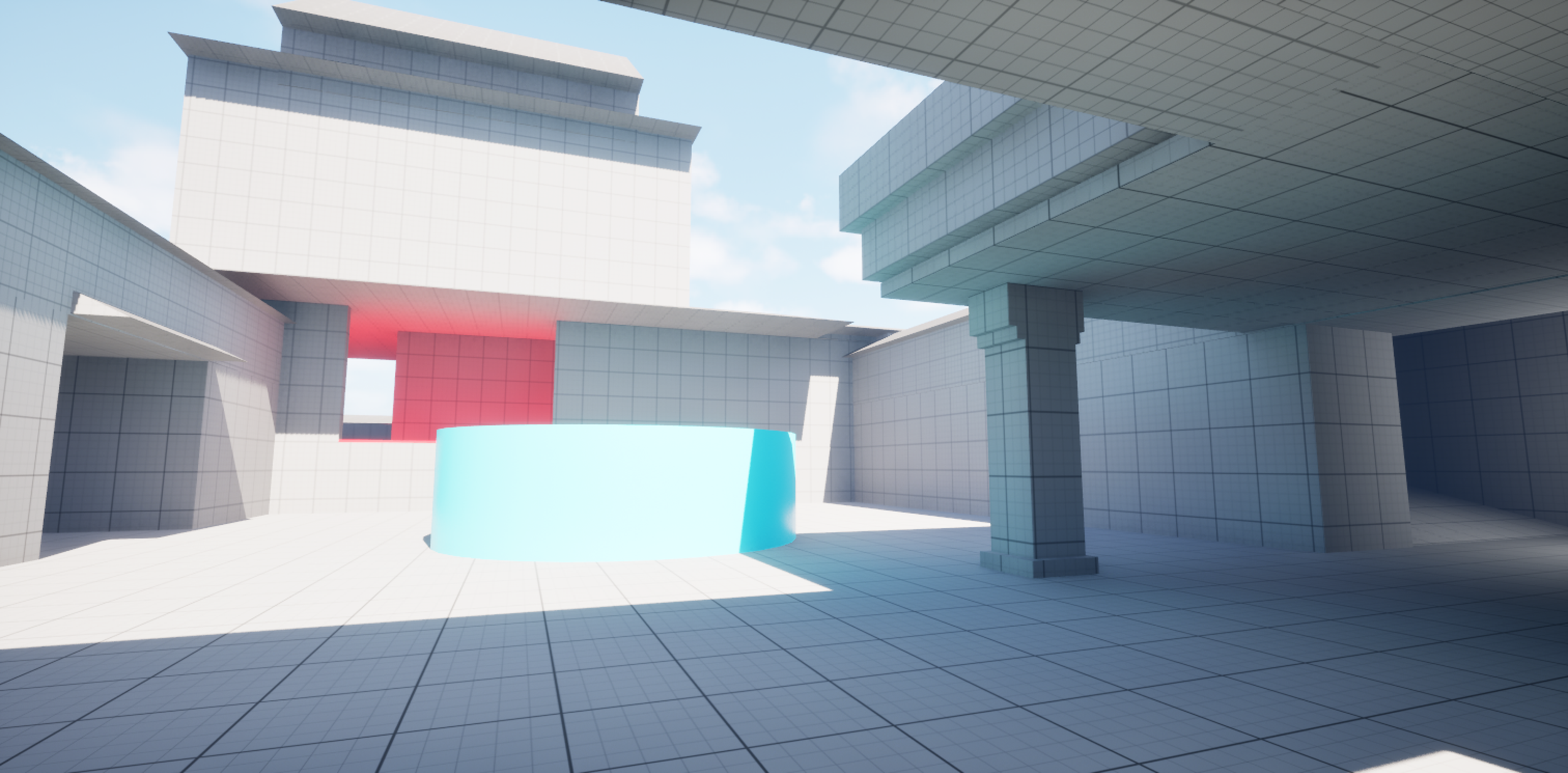
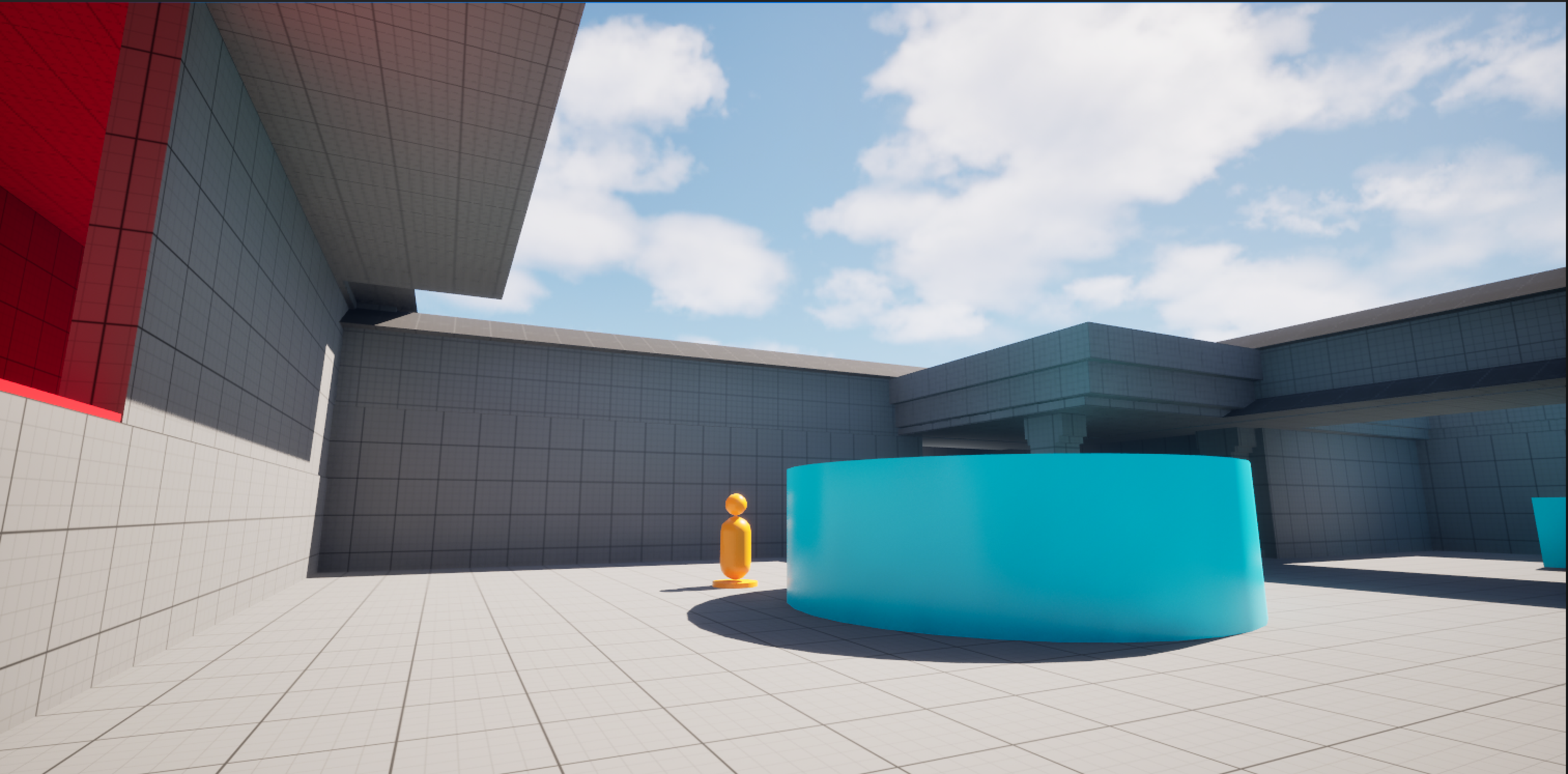
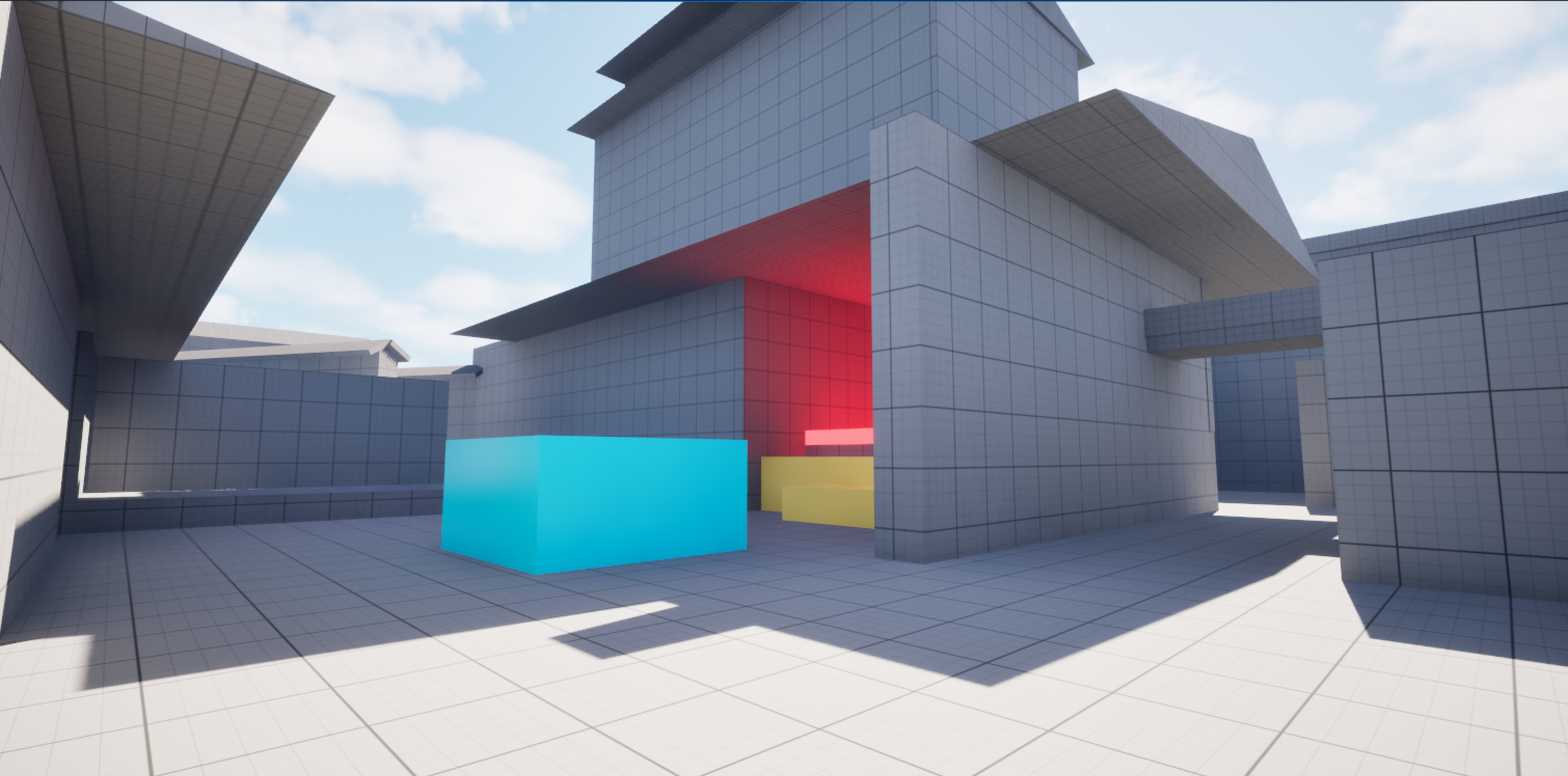
A Site
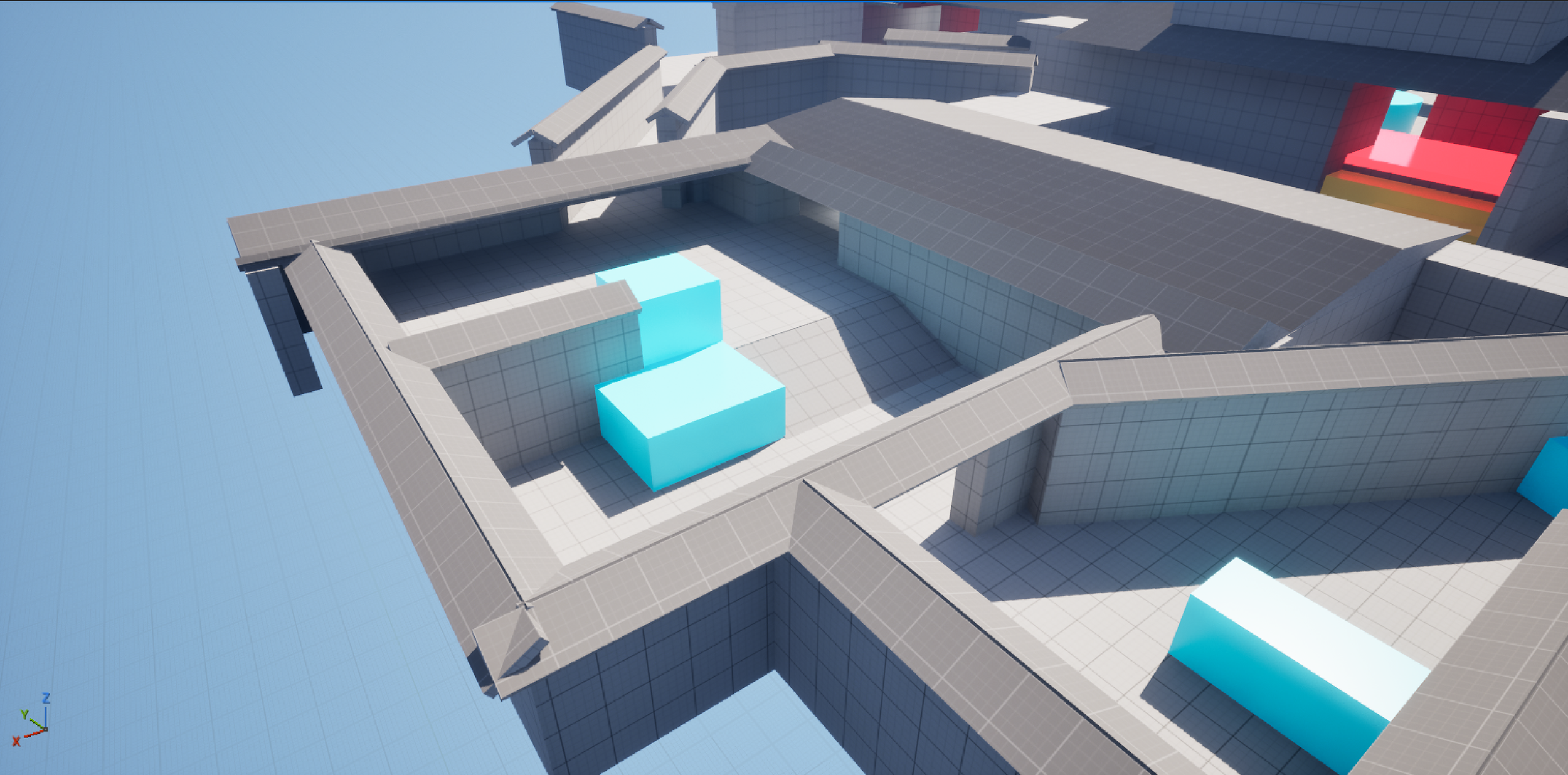
B Site
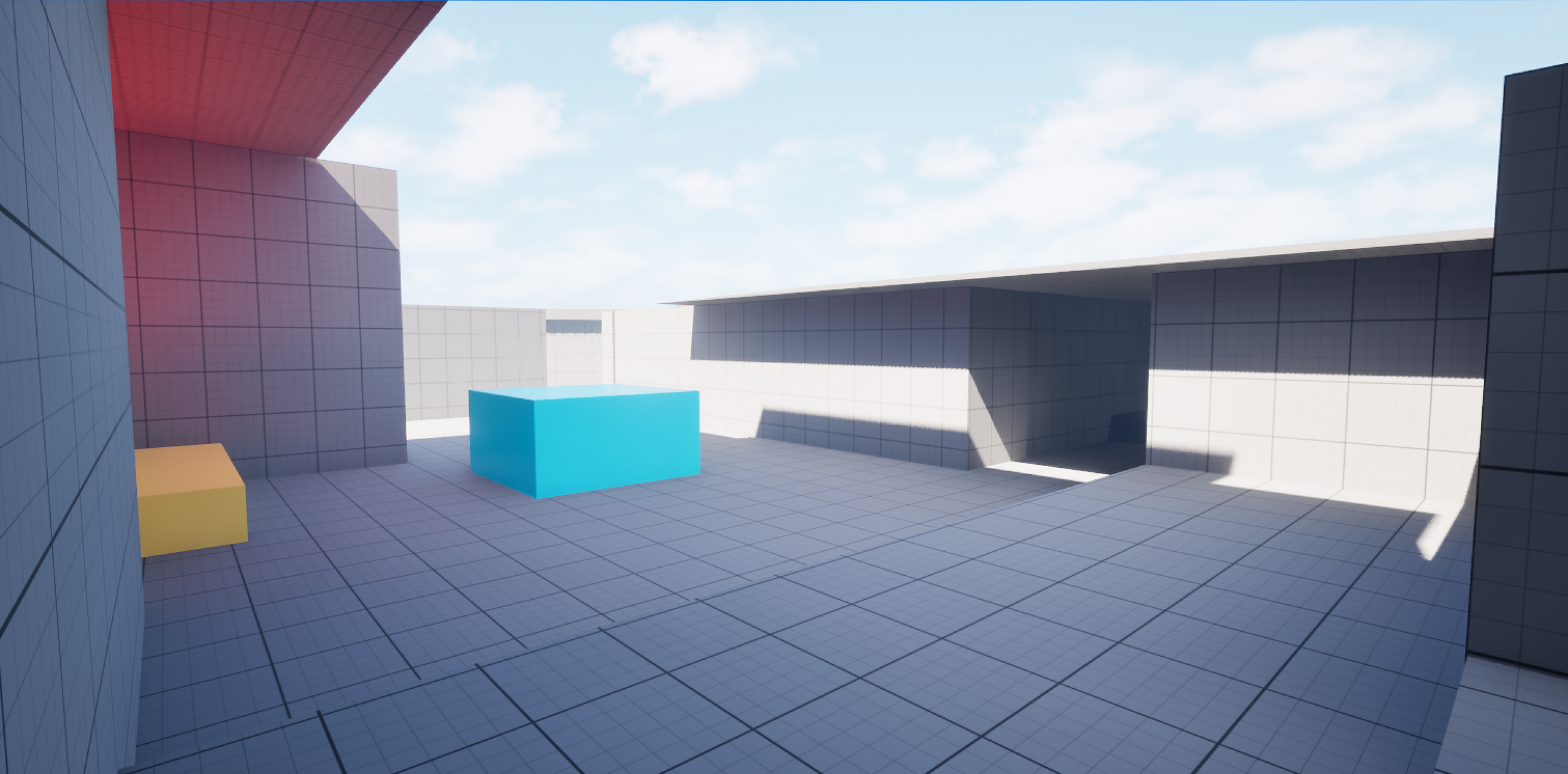
Mid
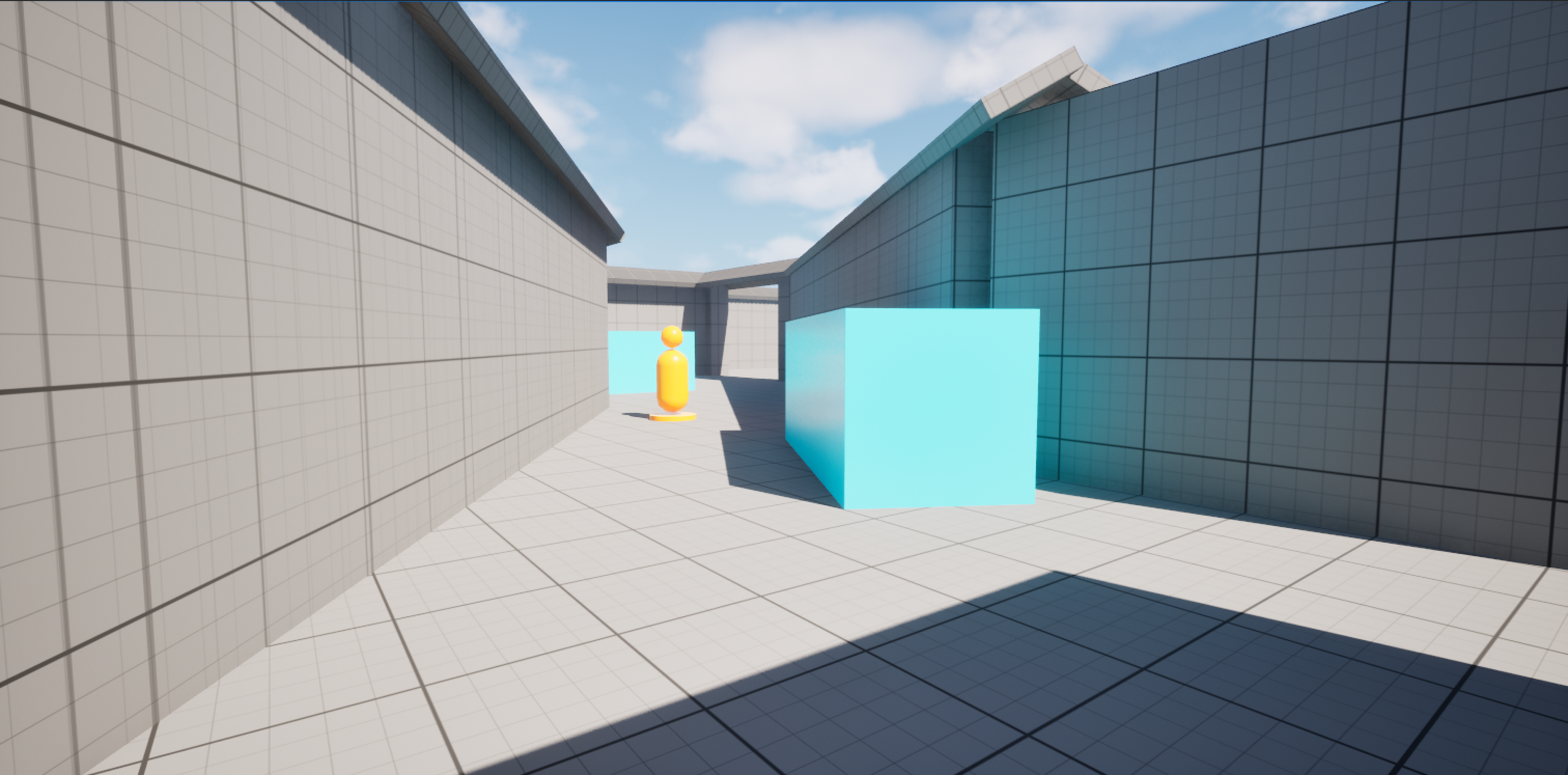
B Lobby
Defender Spawn
Attacker Spawn
Design Overview
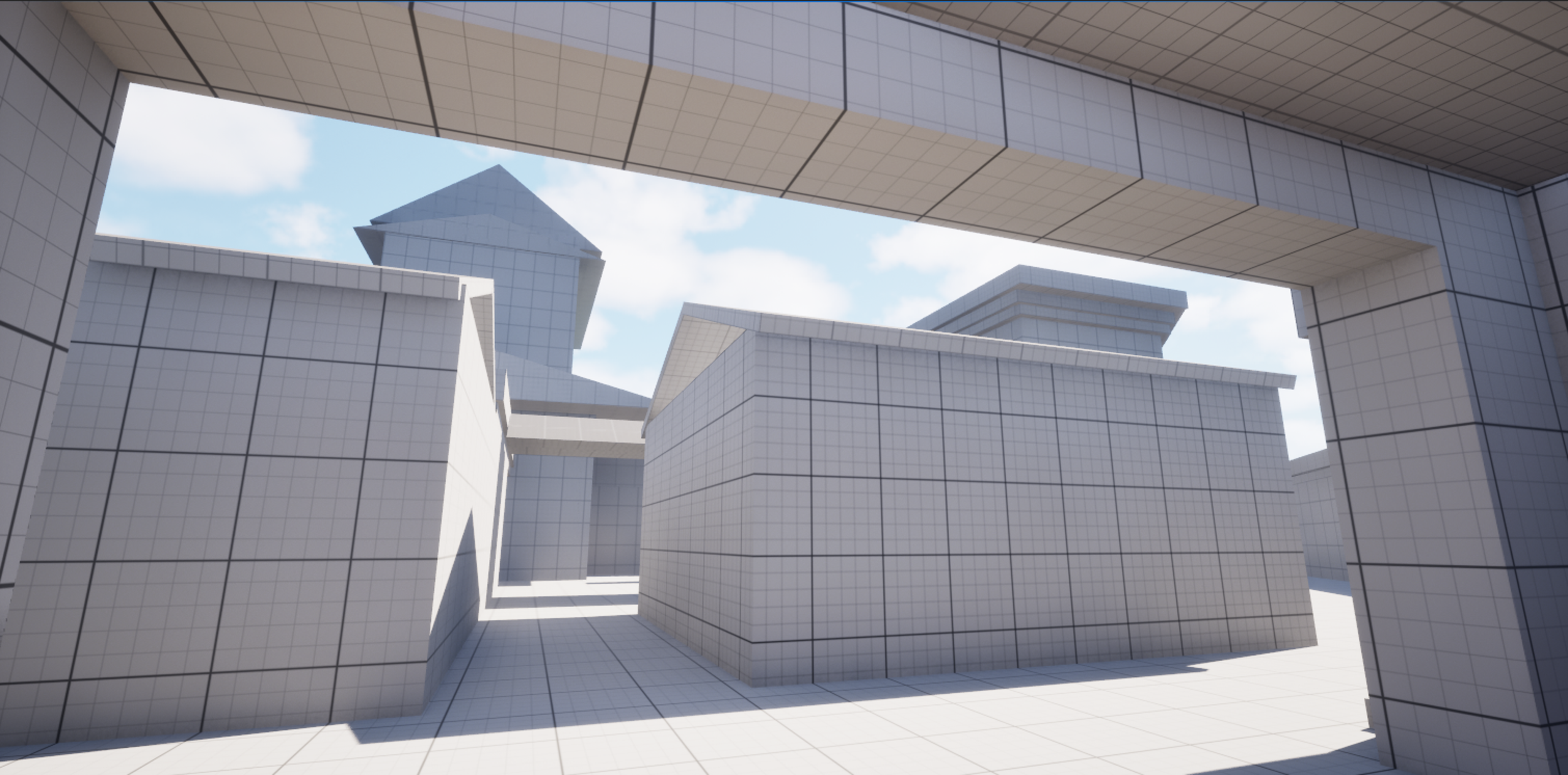
This is a small-to-medium, dual-site, three-lane close-quarters tactical map. Drawing from the spatial language of Beijing's hutong alleyways, it builds rich vertical layering within a compact horizontal footprint.
Both sites use the highly legible courtyard structure of traditional siheyuan architecture as their prototype, creating a vertical drop-in flow of "upper exposure → courtyard edge contest → low-ground plant position", ensuring neither site has a single dominant post-plant position.
A Site serves as the Defender anchor point. The post-plant space is larger and structurally more complex, supporting it as the primary Defender side hold.
B Site features a tighter footprint with limited Defender positioning, actively encouraging aggressive Defender pushes and reactive retakes.
Core Design Logic
Mid is a narrow, open-air corridor. Whichever team wins mid control gains information advantage and rotation support to both elevated platforms flanking the map. However, the high ground does not directly threaten either plant zone, keeping map control rewarding without making it dominant.
Designed as a B Ramp / Banana style linear approach, front-loading early engagements. The lane is intentionally narrow horizontally, forcing close-range duels and disciplined movement. Vertical sight lines are extended through elevation changes to create information flow instead of risk-free off-angles, establishing tension between information gathering and committing to a fight.
Gameplay Experience Goals
Encourage early gunfights, mid-control skirmishes, and high-risk lurks, replacing single decisive executes with a series of micro-engagements across the round
Reward map control, timing reads, and information plays over mechanical skill stacking or static anchor holds
Shape round pacing as: alley skirmish → rotation → retake/push pressure — emphasizing team coordination and dynamic decision-making